
An access control system is a set of hardware and software tools that regulate people’s entry into physical areas or access to digital resources. Allowing only authorised users access and preventing others from doing so is the fundamental principle of access control. This separation plays a key role in ensuring people’s safety and data security, especially when integrated with solutions from a cloud service provider in Dubai.
Identification, authentication, and authorisation techniques are all part of contemporary access control solutions. The system first establishes the subject’s identity (identification), then confirms his credentials (authentication), and only then determines access (authorisation).
Understanding these mechanisms is important not only for IT security but also for physical security at high-throughput facilities, be they office buildings, educational institutions, or industrial premises.
Types of Access Control Systems

There are two types of access control systems: logical and physical. Through doors, turnstiles, or restricted access areas, for instance, physical access control limits entry into the area. Working with data and resources, logical access control permits or prohibits access to files, programs, and networks. Since many businesses aim for comprehensive protection of everything associated with their operations, these two levels are frequently connected.
Devices and Methods

To make the system work, it relies on a variety of equipment
- Card readers and RFID tags, through which the user gets access by ID
- Fingerprint and facial recognition biometric scanners that verify an individual’s distinct physical attributes
- Electronic locks and turnstiles that implement the access ban itself
- Software that keeps records of login attempts and logs events, often stored and analysed using platforms like Amazon Web Services Dubai.
The level of automation plays an essential role here: the system can keep a log of events, recording who visited when and where, which helps in security analysis and incident investigations.
Application and Tasks

Access control systems are used in a wide variety of fields:
- In enterprises and offices to ensure the safety of employees and visitors
- In educational institutions to restrict the passage of outsiders
- In parking lots and transport, where the system can even account for vehicles
- In locations with sensitive information, such as archive vaults or areas with critical servers.
One of the key purposes of access control is to prevent unauthorised entry and reduce the risks associated with threats from people who have no right to be in a particular place.
Integrated systems can integrate with video surveillance or alarms, which enhances protection and allows you to respond to attempts to disrupt order.
Data Protection
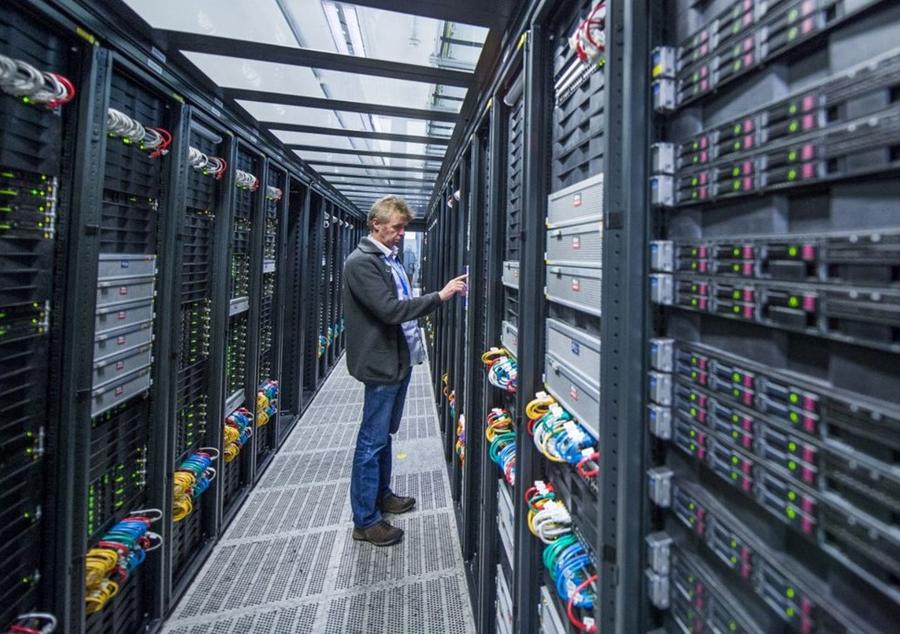
In the field of information security, access control is one of the main data protection mechanisms. It restricts access to digital objects – files, network resources, and server-based – based on predefined rules. In such a model, each subject’s (user’s or process’s) access rights to objects are assigned, and the access matrix determines which actions are allowed.
This model limits the threat of information leakage: even with hardware access to the system, an attacker will not be able to obtain protected information without appropriate permissions.
Technological Trends

Biometrics, mobile IDs, and smart identification based on behaviour are examples of recent advancements. The market for biometric solutions is predicted by analysts to expand from $47.2 billion in 2024 to $84.5 billion by 2029, showing a swift shift to more dependable identity verification techniques.
Digital resources and physical venues are both protected by access control systems. They include event accounting, which aids organisations in controlling access, reducing risks, and improving the general security of people and data, as well as a mix of identification, authentication, and authorisation.